
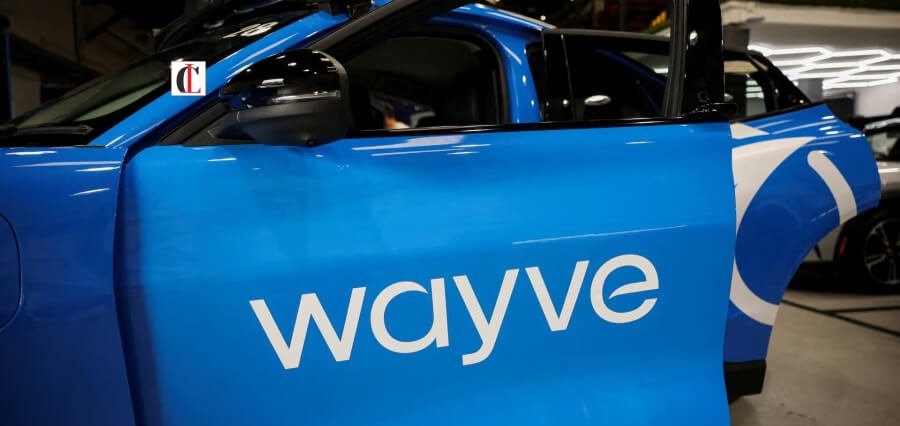
Prime Highlights :
- Wayve raises $2.8 billion from investors including Nvidia, Mercedes-Benz and Nissan to advance its AI driving system.
- Wayve will deploy its technology in Stellantis robotaxis running on Uber’s ride-hailing network.
Key Facts :
- Nissan is assessing Wayve’s safety approach ahead of a planned Japan rollout by March 2028.
- Wayve’s system uses a wide range of sensors and AI chips, unlike Tesla’s camera-only approach.
Background :
Autonomous-driving startup Wayve has raised $2.8 billion from a group of investors and strategic partners that includes Nvidia, Mercedes-Benz and Nissan, signalling strong industry interest in the London-based company’s technology.
In June, Wayve said it would place its driving system in robotaxis built by Stellantis, which will run on Uber’s ride-hailing network.
Wayve relies on an AI method called end-to-end machine learning, which turns sensor data directly into driving decisions in a manner similar to human drivers.
This differs from more conventional systems that combine AI with coded rules and detailed maps to guide vehicle behaviour in different situations.
Tesla follows a similar end-to-end approach, though Wayve’s system works with a broader range of sensors and AI chips rather than relying on cameras alone, allowing it to be licensed to other driverless-car developers, according to CEO Alex Kendall.
Kendall, who co-founded Wayve in 2017, said the company aims to make full self-driving available for any vehicle, brand or region.
Investor interest in the sector has grown following Waymo’s rapid expansion, which now offers paid rides in about a dozen cities after more than a decade of development.
Even so, end-to-end systems face scrutiny over their limited transparency, since it becomes harder to trace why a vehicle chose a particular path. Wayve’s leadership argues that traditional rule-based systems struggle with unpredictable scenarios, while human-like adaptive behaviour offers stronger safety in unusual situations.
Nissan, one of Wayve’s partners, said it is still evaluating the system’s safety approach ahead of a planned rollout in Japan by March 2028.
Experts say end-to-end models may speed up development, though opinions remain divided on whether they are inherently safer than traditional approaches, with some predicting it could take a decade before driverless systems are safely deployed at scale across the United States.