
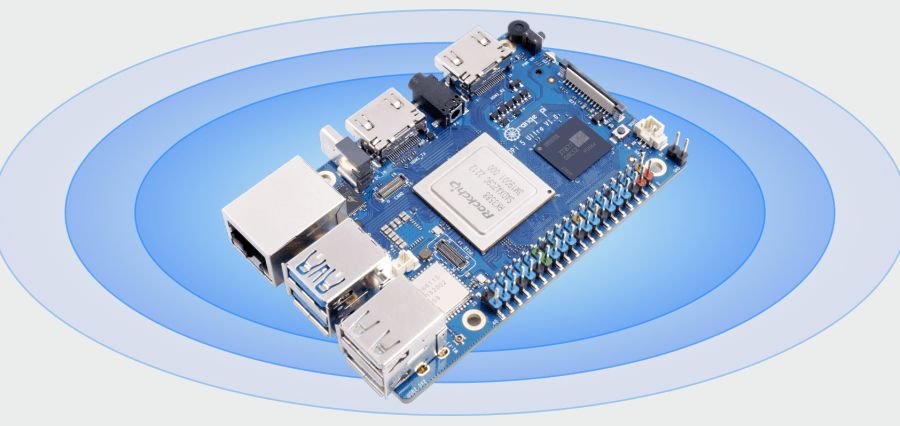
The single-board computer market has evolved rapidly over the past decade, moving far beyond basic hobbyist experiments into serious development platforms capable of handling demanding workloads. Among the latest entries attracting attention is the Orange Pi 5, a compact yet powerful board designed for developers, makers, and tech enthusiasts seeking more processing capability than traditional entry-level systems provide. Built around the Rockchip RK3588S processor, this board positions itself as a performance-focused alternative in a competitive ecosystem.
If you are researching Everything you should know about Orange Pi 5, the first step is understanding its hardware foundation. The board features an octa-core CPU configuration that combines high-performance Cortex-A76 cores with energy-efficient Cortex-A55 cores. This hybrid architecture enables it to balance power and efficiency effectively. Memory configurations can scale up significantly depending on the variant, making it suitable for applications that require heavier multitasking or data processing.
Connectivity is another major advantage. The board includes USB 3.0 ports, HDMI output capable of 4K resolution, PCIe expansion support, and Gigabit Ethernet. GPIO pins and multiple interface options allow integration into embedded systems, robotics projects, or IoT deployments. Storage flexibility and high-speed interfaces make it adaptable for both prototyping and production-level experimentation.
From a software perspective, the board supports multiple operating systems, including various Linux distributions and Android builds. While its ecosystem may not be as extensive as some competitors, ongoing community development continues to expand compatibility and stability. For users evaluating Everything you should know about Orange Pi 5, it is important to recognize that its hardware strength often stands out more prominently than its software maturity.
Performance in Real-World Applications
When discussing Performance, this board distinguishes itself through raw computational strength. The RK3588S chipset delivers impressive multi-core capabilities, making it suitable for workloads that go beyond simple automation scripts or lightweight media playback. Whether deployed as a mini server, a local development environment, or a smart edge device, the system handles concurrent processes with notable efficiency.
AI and edge computing applications are areas where its Performance becomes particularly relevant. The integrated neural processing unit (NPU) enables acceleration of machine learning tasks, including object detection and computer vision applications. Developers working on AI-driven prototypes benefit from the ability to run inference models locally without depending heavily on cloud processing.
Thermal management plays a key role in sustaining consistent output. Under high workloads, proper cooling solutions such as heat sinks or active fans help maintain stability and prevent throttling. In media applications, the board handles 4K decoding and encoding smoothly, making it suitable for advanced home entertainment setups or digital signage systems. Overall, its Performance positions it closer to a compact workstation than a basic educational tool.
How It Stacks Up Against the Raspberry Pi 5
A common question for buyers is How It Stacks Up Against the Raspberry Pi 5. The Raspberry Pi 5, developed by the Raspberry Pi Foundation, has long dominated the single-board computing landscape thanks to its strong community support and well-documented ecosystem.
In terms of raw computational capability, the Orange Pi 5 generally offers stronger processing power due to its advanced CPU architecture and integrated NPU. This becomes especially noticeable in multi-threaded tasks and AI-driven workloads. For developers who prioritize hardware acceleration and higher memory configurations, it may provide a measurable advantage.
However, How It Stacks Up Against the Raspberry Pi 5 is not solely about benchmarks. The Raspberry Pi ecosystem benefits from years of refinement, extensive tutorials, and robust community forums. For beginners or educational institutions, this mature ecosystem often simplifies setup and troubleshooting. The availability of accessories, pre-configured operating systems, and third-party integrations further strengthens its appeal.
Cost and availability also influence purchasing decisions. Depending on regional markets, one board may offer better value per specification. Users focused on experimental AI projects or heavier computing tasks may gravitate toward the more powerful hardware, while those prioritizing community support and stability may prefer the Raspberry Pi platform.
Final Thoughts
Understanding Everything you should know about Orange Pi 5 involves weighing hardware strength against ecosystem maturity. Its advanced processor, expandable memory options, and AI acceleration capabilities make it an appealing choice for demanding applications. At the same time, evaluating How It Stacks Up Against the Raspberry Pi 5 helps clarify whether raw power or community support matters more for your specific project.
For developers, engineers, and enthusiasts seeking high-performance computing in a compact form factor, the Orange Pi 5 represents a forward-looking option that pushes the boundaries of what single-board computers can achieve.